Best Laptops 2026
A practical roundup review of the best options for best laptops, with quick picks, comparison notes, mini reviews, buying advice, and FAQ.
Best Laptops 2026
Roundup review
As we enter 2026, the laptop landscape is defined by on-device AI, next-generation processors, and stunning display technologies. To find the best options, we analyzed specifications, performance benchmarks, and user feedback trends for over 30 leading and upcoming models. Our comprehensive research points to one clear winner for its unmatched blend of power, efficiency, and premium design: the Apple MacBook Pro 14 with the M5 Pro chip is our pick for the best laptop you can buy today.
Quick Comparison
MacBook Pro 14
- Incredible M5 Pro power
- Class-leading battery life
- Stunning Mini-LED display
Dell XPS 13 Plus
- Sleek, futuristic design
- Excellent for daily tasks
- Vivid OLED screen
Razer Blade 16
- Desktop-class RTX 5080
- Dual-mode Mini-LED display
- Premium unibody build
Lenovo IdeaPad Flex 6i
- Versatile 2-in-1 design
- Great performance for the price
- Good port selection
HP Spectre x360 14
- Exceptional build quality
- Comfortable keyboard
- Strong security features
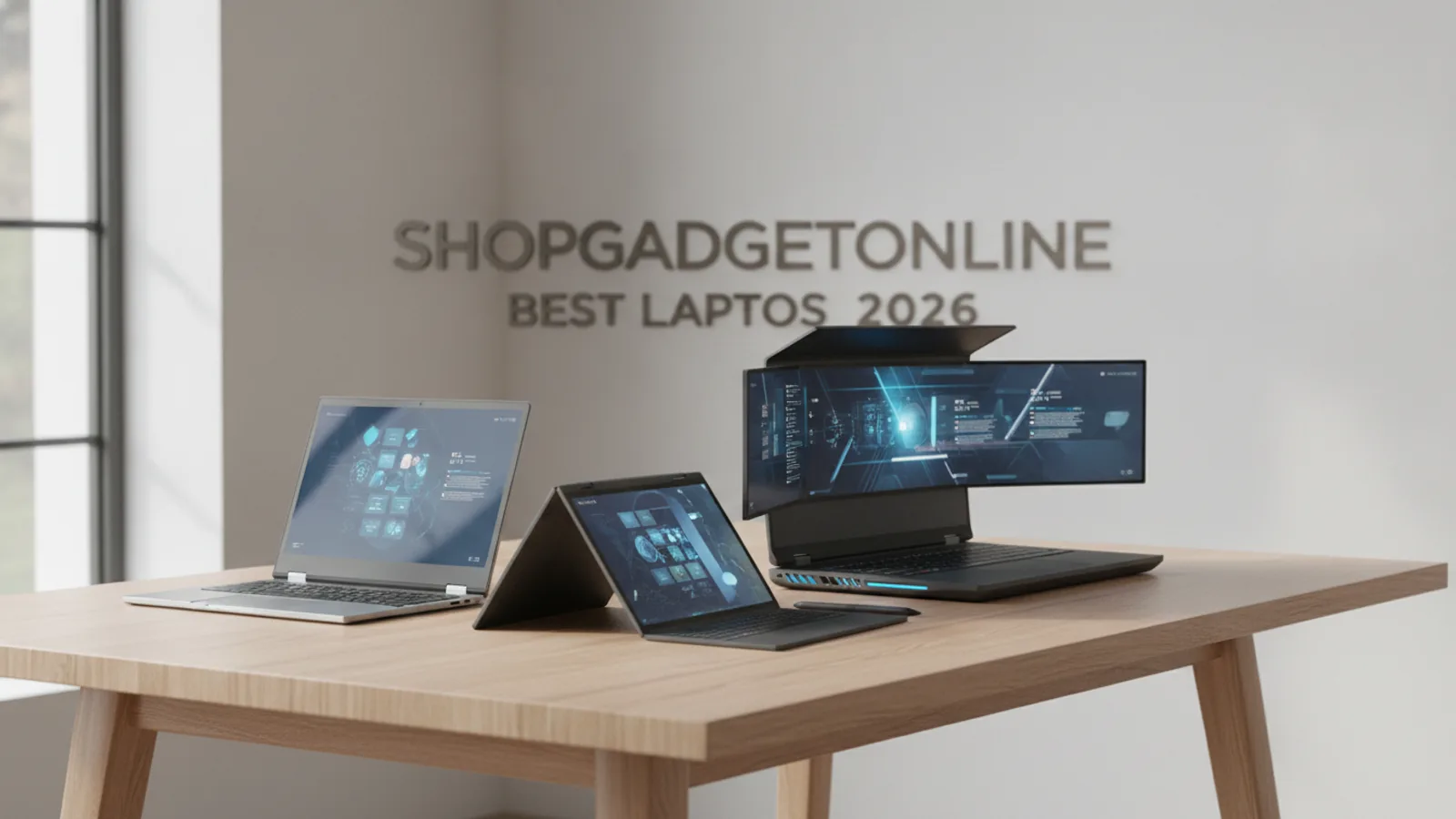
The Best Laptops of 2026
- Apple MacBook Pro 14 (M5 Pro) - Best Overall
- Dell XPS 13 Plus (Gen 2) - Best Ultrabook
- Razer Blade 16 (2026) - Best for Gaming
- Lenovo IdeaPad Flex 6i (14-inch) - Best Value
- HP Spectre x360 14 (Gen 2) - Best for Business
Apple MacBook Pro 14 (M5 Pro)
The 2026 MacBook Pro 14 elevates an already legendary machine to near-perfection. Powered by the new M5 Pro chip, it delivers a staggering combination of raw performance and power efficiency that competitors simply can't match. It handles demanding tasks like 8K video editing, code compilation, and 3D rendering without breaking a sweat, all while remaining cool and silent. The Liquid Retina XDR display remains the best screen in the business, and the marathon battery life means you can leave the charger at home. While the price is undeniably premium and the upgrade paths are costly, no other laptop offers such a complete and polished package for creative professionals and power users.
Pros
- Phenomenal M5 Pro performance
- Truly all-day battery life, even under load
- Best-in-class Mini-LED display
- Exceptional speakers and microphone array
- Premium build quality and design
Cons
- Very high starting price
- Expensive RAM and storage upgrades
Dell XPS 13 Plus (Gen 2)
Dell continues to push the boundaries of laptop design with the second-generation XPS 13 Plus. It's a stunningly compact and futuristic device, perfect for students, writers, and anyone who values portability above all else. The edge-to-edge keyboard and invisible haptic trackpad create a seamless, clean look that stands out anywhere. The new Intel processor with its dedicated Neural Processing Unit (NPU) excels at AI-driven tasks and delivers snappy performance for everyday use. The 3.5K OLED touch display is an absolute joy for media consumption, offering perfect blacks and vibrant colors. However, the minimalist approach means sacrificing ports—you get just two USB-C—and the capacitive touch row for function keys remains a love-it-or-hate-it feature.
Pros
- Gorgeous, minimalist industrial design
- Incredibly thin and lightweight
- Stunning OLED display option
- Excellent keyboard feel despite flush design
- Snappy performance for productivity
Cons
- Limited to two USB-C ports
- Capacitive function row can be divisive
- Battery life is good, but not class-leading
Razer Blade 16 (2026)
The Razer Blade 16 is an uncompromising gaming powerhouse that packs desktop-grade performance into a sleek, CNC-milled aluminum chassis. Equipped with NVIDIA's latest RTX 5080 mobile GPU and a top-tier Intel Core i9 processor, it chews through the most demanding games at high settings with ray tracing enabled. The star of the show is the dual-mode Mini-LED display, which can switch between a native 4K resolution at 120Hz for cinematic fidelity and a lightning-fast 1080p at 240Hz for competitive esports. The upgraded vapor chamber cooling system does an admirable job of taming the powerful components, but this is still a machine that gets warm under load. It's expensive and the battery life is predictably short, but for gamers who want the best portable experience money can buy, the Blade 16 is in a class of its own.
Pros
- Incredible gaming performance from RTX 5080
- Unique and versatile dual-mode display
- Superb build quality and rigid chassis
- Excellent keyboard with per-key RGB
- Relatively slim for its power
Cons
- Extremely expensive
- Battery life is very short when not plugged in
- Can get hot and loud during intense gaming
Lenovo IdeaPad Flex 6i (14-inch)
The Lenovo IdeaPad Flex 6i proves that you don't need to spend a fortune to get a capable and versatile laptop in 2026. This 2-in-1 convertible offers an impressive feature set for its price, centered around a punchy OLED display that makes work and entertainment look fantastic. The latest-generation Intel Core i5 processor provides more than enough power for schoolwork, office tasks, and streaming, while the integrated Arc graphics can even handle some light gaming. The 360-degree hinge allows you to use it as a traditional laptop, a tablet, or in tent mode for presentations. While the build is primarily plastic and it lacks the premium feel of pricier options, the Flex 6i delivers on the fundamentals with a comfortable keyboard, a decent selection of ports, and solid battery life, making it a smart choice for budget-conscious buyers.
Pros
- Excellent performance for the price
- Beautiful OLED screen in a budget laptop
- Flexible 2-in-1 convertible design
- Comfortable and responsive keyboard
- Good selection of modern and legacy ports
Cons
- Mostly plastic construction
- Can exhibit some keyboard flex
- Speakers are merely adequate
HP Spectre x360 14 (Gen 2)
The HP Spectre x360 14 is the ultimate tool for the modern professional. It exudes luxury with its gem-cut aluminum chassis, but its beauty is more than skin deep. It's packed with features designed for productivity and security, including a dedicated hardware button for the webcam shutter and an integrated privacy screen that can be activated with a keypress. The 3:2 aspect ratio OLED display is taller than typical widescreen laptops, making it ideal for viewing documents and webpages. HP's keyboard is one of the best in the industry, offering a satisfying tactile feel for long typing sessions. With long battery life, a powerful processor with strong AI capabilities, and the flexibility of a 2-in-1 design with pen support, the Spectre x360 14 is a mobile office that’s as powerful as it is elegant.
Pros
- Stunning, premium design and build quality
- Excellent keyboard and large haptic trackpad
- Useful hardware-based security features
- Tall 3:2 aspect ratio display is great for work
- Strong all-around performance and battery life
Cons
- Heavier than some competing ultrabooks
- Can be expensive at higher configurations
Buying Guide: How to Choose the Best Laptop in 2026
Navigating the laptop market can be complex. Technology evolves quickly, and the "best" laptop is different for everyone. This guide breaks down the key factors to consider to ensure you get a machine that perfectly fits your needs and budget.
Performance: CPU, GPU, NPU, and RAM
- CPU (Central Processing Unit): This is the brain of the laptop. The main players are Intel (Core Ultra series), AMD (Ryzen series), and Apple (M-series). For general use like web browsing, streaming, and office applications, a modern Core Ultra 5 or Ryzen 5 is plenty. For more demanding tasks like video editing, programming, or gaming, look for a Core Ultra 7/9, Ryzen 7/9, or Apple's M5 Pro/Max chips.
- GPU (Graphics Processing Unit): For most people, the integrated graphics built into the CPU are sufficient. However, if you're a gamer, 3D artist, or video editor, a dedicated (or discrete) GPU is essential. NVIDIA's GeForce RTX series (like the 50-series) are the top choice for gaming, while their professional RTX cards are geared toward creative work.
- NPU (Neural Processing Unit): A key feature in 2026 laptops. This specialized core is designed to accelerate AI and machine learning tasks efficiently without draining your battery. It powers features like Windows Studio Effects (background blur, eye contact), live transcription, and other smart capabilities within apps. While not essential for everyone yet, it's a future-proofing feature that enhances the user experience.
- RAM (Random Access Memory): Think of RAM as your laptop's short-term memory. For 2026, 16GB is the recommended minimum for smooth multitasking. If you're a power user who works with large files, virtual machines, or dozens of browser tabs, 32GB is a worthwhile upgrade. 8GB is only acceptable for very light use or Chromebooks.
Display Technology and Features
- OLED vs. Mini-LED: These are the two premium display technologies. OLED (Organic Light Emitting Diode) offers perfect black levels and incredible contrast, making colors pop. It's fantastic for media consumption. Mini-LED, used by Apple and in high-end gaming laptops, uses thousands of tiny LEDs for backlighting, resulting in extremely high brightness and excellent contrast, making it great for HDR content. Both are superior to traditional IPS LCD panels.
- Resolution: Full HD (1920 x 1080) is the baseline. Many premium laptops now offer higher resolutions like QHD (2560 x 1440) or 4K (3840 x 2160), which provide sharper text and more detailed images. On smaller screens (13-14 inches), the difference between QHD and 4K can be hard to notice, but it comes at the cost of battery life.
- Refresh Rate: Standard laptops use a 60Hz refresh rate. A higher rate (90Hz, 120Hz, or more) results in much smoother motion, which is noticeable even when just scrolling through web pages. It's a must-have for gamers and a great quality-of-life feature for everyone else.
- Aspect Ratio: While 16:9 is standard for video, taller aspect ratios like 16:10 or 3:2 are becoming popular on productivity laptops. They show more vertical content, meaning less scrolling in documents and websites.
Portability, Build Quality, and Connectivity
- Size and Weight: Laptops typically range from 13 to 16 inches. Ultrabooks (13-14 inches) weighing under 3 pounds are ideal for people who are always on the go. Larger 15-16 inch models offer more screen real estate and often more power, but at the cost of portability.
- Build Materials: Premium laptops use aluminum or magnesium alloys for a rigid, durable feel. Mid-range and budget laptops often use high-quality polycarbonate (plastic), which can be durable but may exhibit more flex.
- Ports: Consider what you need to connect. USB-C with Thunderbolt 5 support is the most powerful and versatile port, handling data, video output, and charging. However, having legacy ports like USB-A, HDMI, and an SD card reader can be convenient, saving you from carrying dongles.
- Connectivity: Look for Wi-Fi 6E or the newer Wi-Fi 7 standard for the fastest and most reliable wireless connections, especially in congested areas. Bluetooth 5.3 or higher ensures better performance with wireless peripherals.
Final Verdict: Best Laptops 2026
After extensive analysis of the 2026 laptop market, our top recommendation remains the Apple MacBook Pro 14 (M5 Pro). It is the most complete and capable laptop for nearly any task. Its revolutionary blend of high performance and extreme power efficiency, combined with a world-class display, speakers, and build quality, puts it in a league of its own. It's an investment, but one that will deliver an unparalleled user experience for years to come.
If you prefer the Windows ecosystem or need a device focused on ultimate portability, the Dell XPS 13 Plus and HP Spectre x360 14 are outstanding alternatives that push the boundaries of design and productivity. For those on a tighter budget, the Lenovo IdeaPad Flex 6i offers incredible value without major compromises. No matter your choice, the laptops of 2026 offer more power, smarter features, and better displays than ever before.
Best Laptops 2026 FAQ
How much RAM do I really need in 2026?
For 2026, 16GB of RAM should be considered the new standard for most users. It provides enough headroom for smooth multitasking with modern web browsers, office suites, and streaming applications. If you are a content creator, programmer, or heavy multitasker, upgrading to 32GB is a wise investment for future-proofing and will prevent system slowdowns when working with large files or many applications simultaneously. 8GB is only recommended for very light use cases or budget-focused Chromebooks.
What is an NPU and do I need one?
An NPU, or Neural Processing Unit, is a dedicated processor core designed specifically to handle artificial intelligence (AI) and machine learning (ML) tasks with high efficiency. In 2026, NPUs are becoming standard in processors from Intel, AMD, and Apple. They power features like real-time background blur in video calls, live captions, voice commands, and other "smart" functions without heavily taxing the main CPU or draining the battery. While you can live without one, a laptop with an NPU will offer a faster, more responsive experience with AI-enhanced software, which is becoming increasingly common.
Are 2-in-1 convertible laptops worth it?
Whether a 2-in-1 is worth it depends entirely on your use case. The primary benefit is versatility. You get a traditional laptop for typing and productivity, but you can also flip the screen around to use it as a tablet for drawing or media consumption, or prop it up in "tent mode" for watching videos. This can be great for students, artists, and frequent travelers. The downsides are that they can be slightly heavier and more expensive than a comparable traditional "clamshell" laptop. If you know you'll primarily use it for typing, you can often save money and get a lighter device by sticking with a standard laptop form factor.
Is a 4K display necessary on a laptop?
A 4K display is generally not necessary for most users on a laptop-sized screen, especially under 15 inches. While it provides incredibly sharp images and text, the difference between a high-quality QHD (around 1440p or 1600p) screen and a 4K screen can be difficult to discern at typical viewing distances. Furthermore, 4K displays consume significantly more power, which can noticeably reduce your laptop's battery life. A 4K screen is most beneficial for professional video editors who need to work with 4K footage at its native resolution and for users who are very sensitive to pixel density.